Choosing a Student Project
A good student project fits your learning goals, the lab’s research and the time available to do it well. This decision tree helps you prepare a conversation about a project. Start with the existing project portfolio, then consider the purpose, data and resources your contribution would need.
The tree is an orientation guide. Every route still needs a suitable supervisor, appropriate skills, ethical and institutional requirements, and a realistic workload. Funding alone does not create supervision capacity. Read our approach to supervision capacity alongside this page.
Student project decision tree
Open the full-size diagram
Open the printable PDF (new tab)
The route in words
1. Clarify the purpose
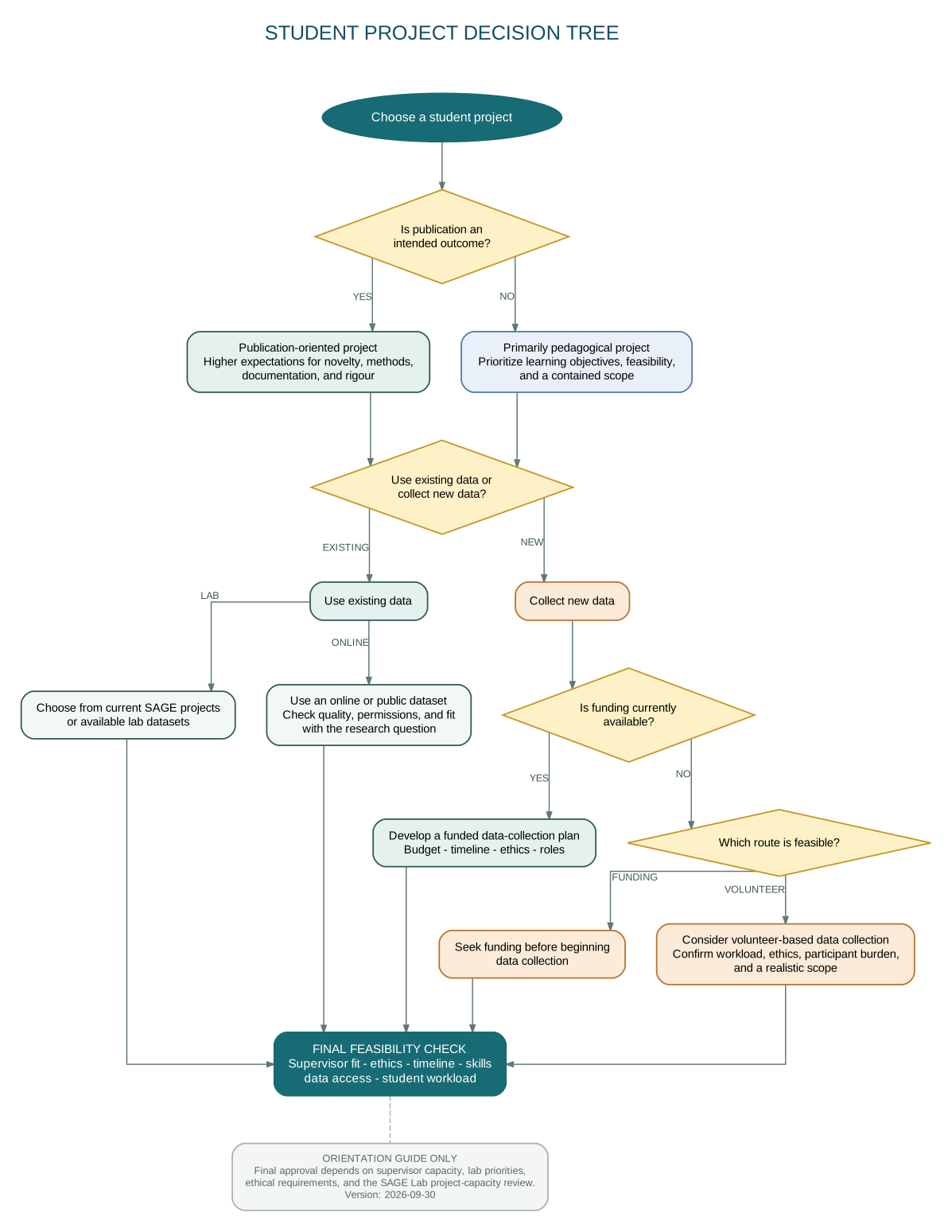
Is scientific publication an intended outcome? For publication-oriented research, discuss the contribution, methods, documentation and manuscript responsibilities from the beginning. A primarily pedagogical project may instead focus on a bounded learning objective. Both require care, integrity and appropriate ethics. Agree on the purpose rather than assuming every training exercise becomes a paper.
2. Identify the data
If suitable data already exist, consider current SAGE projects or available lab datasets. Public or online datasets are another possibility: check their quality, access conditions, permissions and fit with the question. Existing data can reduce the need for a new collection but still require methodological expertise and review.
If your question requires new data, discuss the collection plan and the resources it would need.
3. Consider the resources for new data
With funding available, develop a plan covering the budget, timeline, ethics and roles. Without funding, consider seeking support before collecting data, or whether a collection involving volunteer help is genuinely feasible and permitted. Discuss workload, participant burden and the scope of the work. The volunteer route is not permission to create an unpaid research role or to bypass institutional requirements. If neither route fits, reconsider the scope or the use of existing data.
4. Check feasibility together
Confirm supervision fit and capacity, ethics, timeline, skills, data access and student workload. Clarify which lab priority the project advances and what existing commitment it would displace. A feasible proposal also identifies the first useful deliverable, how much PI review it needs, and who can continue the work if someone leaves.
What to bring to the project discussion
Prepare a short proposal with your question, the intended output, available materials, your role and realistic availability. Identify the help needed, foreseeable costs and the next decision. We can then agree on a bounded module or discuss whether a new project fits.
The research-assistant onboarding guide provides the wider reading path. The skills guide helps you choose learning goals, while the SAGE Community offers peer exchange. The Idea Garden remains an optional archive for inspiration, rather than a list of approved projects.