Research
SAGE investigates how psychological science can promote prosocial change, support individual well-being, and strengthen the evidence on which those efforts depend. Our central ambition is to develop a science of robust prosociality: changes in empathy, kindness, cooperation, and social cohesion that endure across time, settings, populations, and measures. Informed by contemplative traditions and theories of self and social identity, our work is organized around three interconnected research programs. Explore our current projects for a concrete view of this work.
Robust prosociality, identity, and collective life
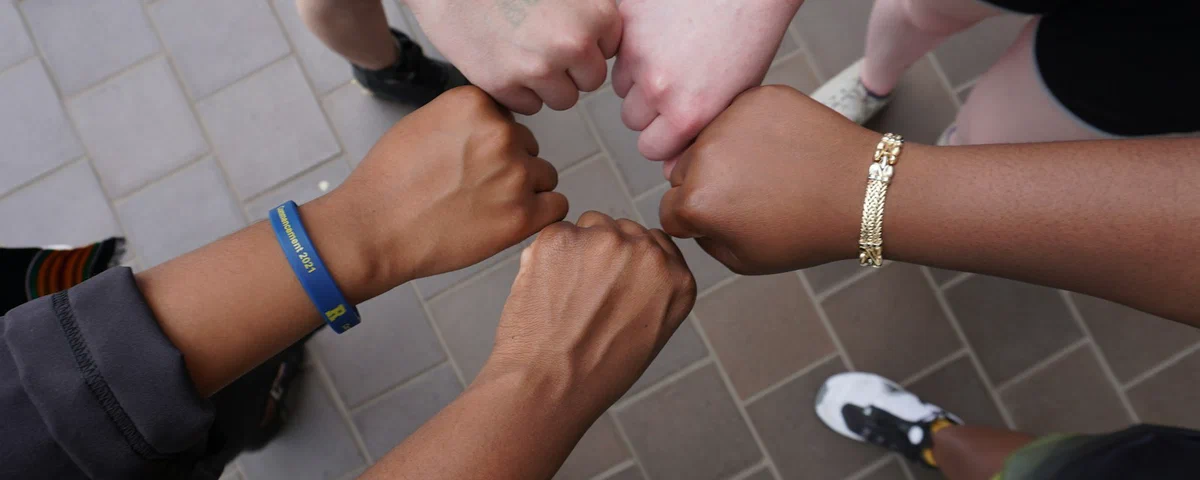
How can we strengthen empathy, kindness, cooperation, and social cohesion in divided societies?
This program studies how people understand and care for others, how identities and group boundaries shape behaviour, and how psychological interventions can reduce aggression, prejudice, and polarization. Our work has examined virtual body-swapping as a way to increase empathy and loving-kindness books as a durable intervention for prosocial change.
Current research uses artificial intelligence to identify promising nonfiction books and then tests their effects in large human studies. Looking ahead, we aim to understand how inclusive identities, sustained engagement, social networks, and different media environments can foster social harmony in schools, communities, and society.
Well-being, self, and robust personal change

How can people cultivate happiness, inner peace, and a healthier relationship with themselves?
This program examines the personal and social conditions that shape well-being, including psychological needs, social inclusion, self-concept, self-compassion, attention, and contemplative practice. We are especially interested in why an intervention benefits some people more than others and how sustained engagement with practices or ideas can produce meaningful change.
Current and future work considers interventions delivered through meditation, nonfiction books, artificial intelligence, videos, podcasts, and other formats, as well as experiences such as dreams and other states in which ordinary self-control is reduced.
Open, reproducible, and inclusive science

How can behavioural science produce knowledge that is more credible, accessible, and representative?
Open science supports how we conduct research across the lab and also forms a smaller research stream of its own. We examine replicability, research practices, statistical methods, artificial intelligence, and metascience. We develop tools and contribute to large collaborative projects that test the robustness of published findings and improve the analysis of quantitative and qualitative data.
We also study whose knowledge is represented in behavioural science. This includes documenting the underrepresentation of researchers and populations from the Global South and identifying practices that lead scientists to make overly broad claims from narrow evidence.
An interdisciplinary toolkit
Across these programs, we combine experiments and randomized controlled trials with artificial intelligence, virtual reality, big data, contemplative practices, nonfiction books, qualitative analysis, and social network methods. These tools allow us to study both immediate psychological processes and changes that unfold through sustained engagement over time.
Idea Garden
The Idea Garden is a growing collection of specific questions and possible projects. Its five domains—attention and meditation; dreams and low-control states; polarization and prejudice; self, identity, and agency; and social change and prosociality—provide a more detailed map within and across the three broad programs above.
The boundaries are intentionally permeable: many of our most promising questions connect individual well-being, relationships with others, collective life, and the methods used to study them.